
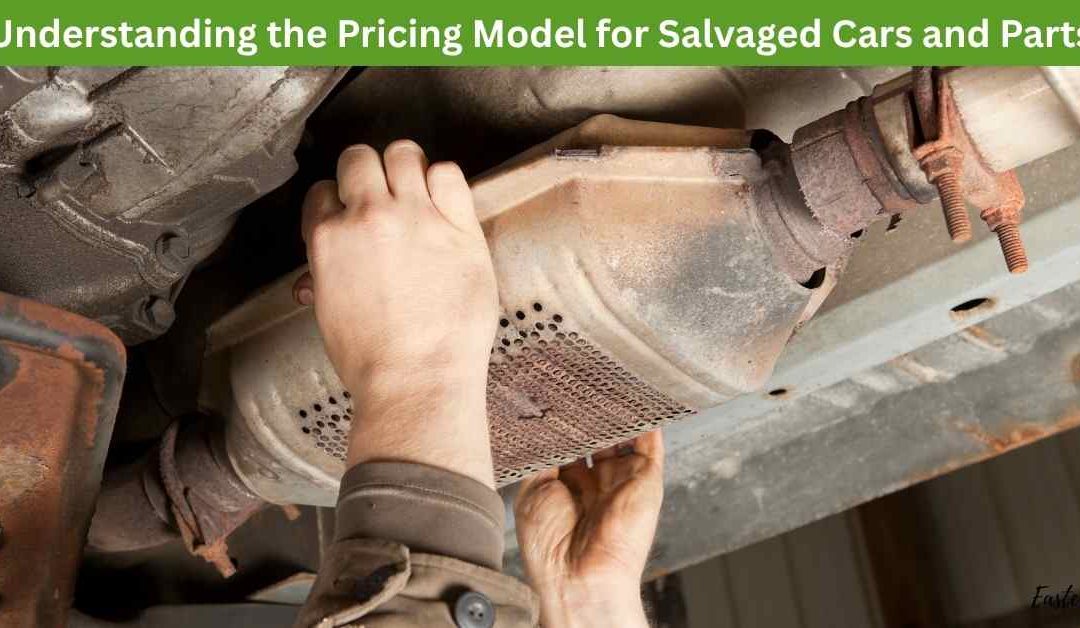
If you’ve ever wondered how auto wreckers come up with a price for your car, or why some used parts cost more than others, you’re not alone. Pricing in the salvage industry isn’t random. It’s based on a mix of market demand, material value, and the condition of the vehicle or part.
In simple terms, salvage pricing is influenced by what can be reused, what can be recycled, and how much those materials or components are worth at the time.
Once you understand how it works, it becomes much easier to spot a fair offer and make smarter decisions.
How do auto wreckers determine the value of a salvaged car?
When you request a quote, wreckers look at several key factors to estimate your car’s value.
These typically include:
- Make, model, and year
- Overall condition (running or non-running)
- Extent of damage
- Demand for parts from that model
- Current scrap metal prices
A newer vehicle with high-demand parts will usually fetch more than an older car with limited resale value.
Why do scrap metal prices affect car value?
Even if your car isn’t running, it still has value, mainly in its metal.
Vehicles are largely made of steel and aluminium, and these materials are constantly traded in global markets. When scrap metal prices go up, the base value of your car often increases too.
On the flip side, if metal prices drop, offers may be slightly lower. This is why quotes can vary over time, even for the same vehicle.
What role does demand for parts play in pricing?
This is one of the biggest factors.
Auto wreckers don’t just buy cars, they break them down and sell usable parts. If your vehicle has components that are in high demand, it becomes more valuable.
For example:
- Popular models with common repairs
- Vehicles with interchangeable parts
- Cars known for expensive replacement components
If parts are easy to resell, wreckers can offer better prices.
How is the value of individual car parts determined?
Each part has its own pricing logic, based on a few key points:
- Condition (newer, less worn parts are worth more)
- Availability (rare parts often cost more)
- Demand (commonly needed parts sell faster)
- Compatibility (parts used across multiple models are more valuable)
For instance, an engine in good condition will usually be priced much higher than interior trim pieces.
Why are some used parts still expensive?
It might seem surprising, but some second-hand parts aren’t cheap, and there’s a good reason for that.
Parts can be expensive if they are:
- Rare or discontinued
- In high demand
- Costly to replace new
Even as used items, they still offer significant savings compared to buying brand-new, which keeps their value relatively high.
Do running cars always get better prices?
Generally, yes, but it depends on the situation.
A running car:
- Is easier to assess
- Has more immediately usable components
- May require less dismantling effort
However, a non-running car with valuable parts can still fetch a strong price. It’s not just about whether it drives, it’s about what can be recovered from it.
How do condition and damage affect pricing?
Condition plays a major role in determining value.
Wreckers will consider:
- Accident damage
- Engine condition
- Missing parts
- Interior wear
A car with severe damage may still have valuable components, but the overall price will reflect the cost and effort required to salvage those parts.
Are quotes fixed or can they change?
This is a common question.
Most reputable auto wreckers provide a quote based on the information you give them. If that information is accurate, the final price should be very close to the original quote.
However, prices may change if:
- The car’s condition is different than described
- Key parts are missing
- There’s additional damage
Clear communication helps avoid surprises.
Why do different wreckers offer different prices?
It’s normal to receive different quotes from different companies.
This can happen because:
- Each wrecker has different demand for parts
- Their inventory needs vary
- They operate with different cost structures
Some may value certain vehicles more than others, depending on what they specialise in.
Is it worth comparing multiple quotes?
Absolutely.
Getting a few quotes helps you:
- Understand the market value of your car
- Identify unusually low or high offers
- Choose a service that feels fair and transparent
It only takes a little extra time and can make a noticeable difference in what you receive.
How can you tell if you’re getting a fair price?
A fair offer usually comes with:
- A clear explanation of how the price was calculated
- Consistency between the quote and final payment
- No hidden fees
- Professional communication
If a company is open and straightforward, that’s a good sign you’re dealing with a reliable operator.
Does location affect salvage pricing?
Yes, it can.
Factors like:
- Local demand for parts
- Transport and logistics costs
- Regional scrap metal rates
can all influence the final offer. That’s why local auto wreckers may sometimes provide more competitive pricing compared to distant operators.
A clearer picture leads to better decisions
Understanding how salvage pricing works takes a lot of the guesswork out of selling your car or buying used parts. It’s not just about the vehicle as a whole, it’s about the value hidden within it.
When you know what influences pricing, you’re in a much better position to recognise a fair deal and choose the right auto wrecker with confidence.
If you are in Mentone, and looking to sell your car or get cash for trucks, below is the best way to visit us.
Eastern Cash For Cars
720 High St Rd, Glen Waverley, VIC 3150
(03) 7035 7830
www.easterncashforcars.com.au
Recent Comments