
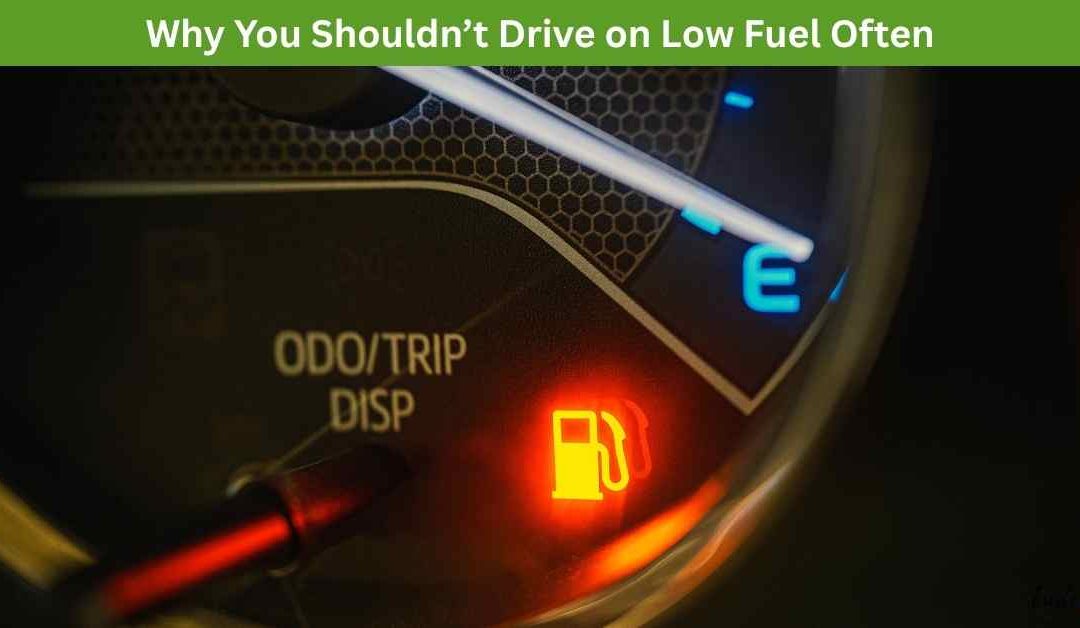
Running your car on low fuel might seem harmless, especially if you’re just trying to stretch out a few extra kilometres before filling up. But doing this regularly can actually cause more harm than you might expect. Over time, it can affect your car’s performance, damage key components, and even lead to costly repairs.
Keeping your fuel tank adequately filled isn’t just about convenience, it’s part of proper vehicle care.
Is it bad to drive on low fuel?
Yes, especially if it becomes a habit. While modern cars are designed to handle occasional low fuel situations, consistently driving near empty can:
- Put extra strain on your fuel system
- Increase the risk of breakdowns
- Reduce overall efficiency
It’s best to treat low fuel as a short-term situation, not a regular practice.
How low fuel affects your fuel pump
Your fuel pump relies on petrol or diesel to stay cool and lubricated. When the fuel level is too low:
- The pump can overheat
- It may wear out faster
- You risk premature failure
Replacing a fuel pump can be expensive, so maintaining proper fuel levels helps protect it.
Can low fuel damage your engine?
Indirectly, yes. When fuel levels are very low:
- Sediment from the bottom of the tank may be drawn into the system
- This can clog fuel filters or injectors
- Engine performance may suffer
While fuel filters are designed to catch debris, frequent exposure can still cause issues over time.
What happens if you run out of fuel completely?
Running out of fuel isn’t just inconvenient, it can create additional problems:
- Air can enter the fuel system, especially in diesel vehicles
- Restarting the engine may require extra steps or priming
- It can leave you stranded in unsafe locations
Avoiding this situation is always the safer option.
Does driving on low fuel affect fuel efficiency?
It can. A consistently low fuel level may:
- Cause uneven fuel delivery
- Reduce engine efficiency
- Lead to inconsistent performance
Keeping your tank at a reasonable level supports smoother operation.
How low should you let your fuel tank go?
A good rule of thumb is to refill before your tank drops below a quarter full. This helps:
- Protect the fuel pump
- Reduce the risk of drawing in debris
- Give you a buffer in case of unexpected delays
It’s a simple habit that can prevent bigger issues.
Why drivers often ignore low fuel warnings
Many drivers push their fuel limits because:
- They’re busy or in a rush
- They rely too much on estimated driving range
- They assume it won’t cause damage
While it may not cause immediate problems, repeated behaviour can add up over time.
Simple habits to avoid low fuel issues
- Refill your tank regularly instead of waiting for the warning light
- Plan fuel stops during longer trips
- Keep an eye on your fuel gauge rather than relying only on alerts
Small changes in routine can make a big difference in long-term vehicle health.
Driving on low fuel occasionally isn’t the end of the world, but making it a habit can lead to unnecessary wear and potential damage. By keeping your fuel tank at a healthy level and refuelling early, you protect your car’s fuel system and ensure a smoother, more reliable driving experience every day.
If you are in Box Hill, and looking to sell your car or get cash for trucks, below is the best way to visit us.
Eastern Cash For Cars
720 High St Rd, Glen Waverley, VIC 3150
(03) 7035 7830
www.easterncashforcars.com.au
Recent Comments