
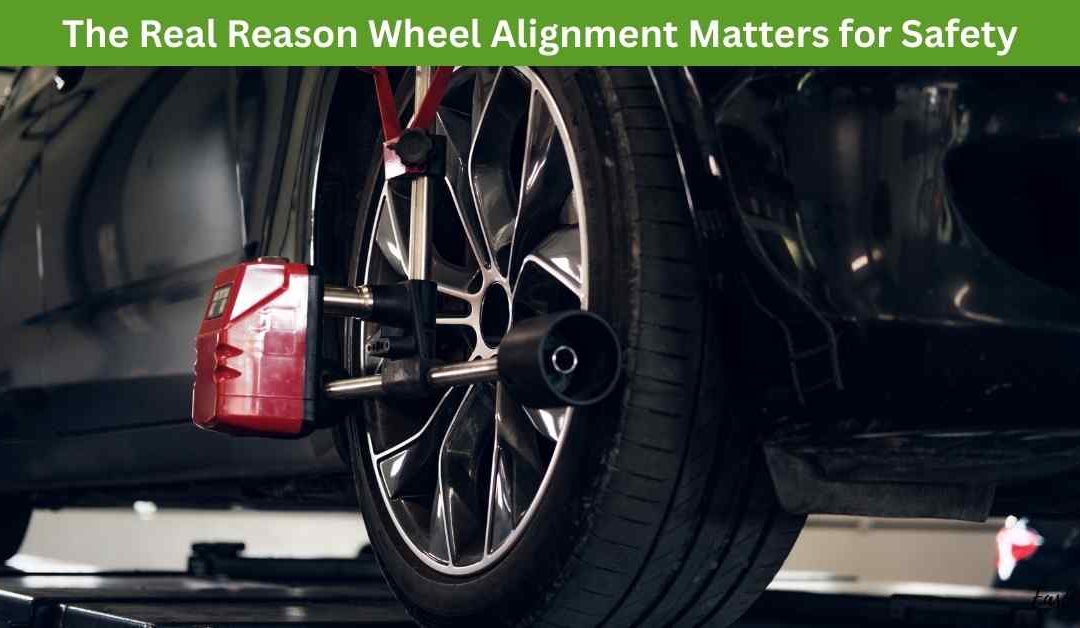
Wheel alignment is one of those car maintenance items many drivers put off. The car still moves, the steering wheel might only be slightly off-centre, and everything feels “good enough.” But wheel alignment isn’t just about comfort or tyre life—it plays a major role in your safety every time you drive.
Misaligned wheels can quietly affect how your car handles, brakes, and stays stable, especially in emergency situations. Understanding why alignment matters helps you spot problems early and avoid risks you might not even realise you’re taking.
What Is Wheel Alignment, in Simple Terms?
Wheel alignment refers to how your tyres are angled and positioned in relation to the road and each other. The goal is to ensure all four wheels are pointing in the right direction and making proper contact with the road surface.
Correct alignment keeps your car stable, predictable, and easier to control. When alignment is off, even slightly, your vehicle may still drive—but not safely.
Why Does Wheel Alignment Affect Safety?
Wheel alignment directly influences how your tyres grip the road. When wheels aren’t aligned properly, the tyre contact patch becomes uneven. This reduces traction, increases stopping distances, and affects how your car responds to steering inputs.
In everyday driving, this may feel minor. In an emergency stop or sudden swerve, it can be the difference between avoiding a collision and not.
What Happens When Wheels Are Out of Alignment?
Misalignment often develops gradually from everyday driving. Potholes, kerbs, speed bumps, and rough roads can all knock wheels out of position.
Common effects include:
- Car pulling to one side
- Steering wheel sitting crooked
- Uneven or rapid tyre wear
- Reduced stability at higher speeds
Each of these signs points to reduced control, even if the car still feels drivable.
How Misalignment Increases Accident Risk
Longer Braking Distances
When tyres don’t sit flat on the road, braking efficiency drops. The car may take longer to stop, especially in wet conditions where traction is already reduced.
Reduced Control During Sudden Manoeuvres
In emergency situations, drivers rely on quick, predictable steering. Misaligned wheels can cause delayed or uneven responses, making it harder to avoid obstacles.
Increased Risk in Wet or Slippery Conditions
On rain-soaked roads, proper tyre contact is critical. Misalignment reduces water dispersion and grip, increasing the chance of skidding or losing control.
How Wheel Alignment Protects Your Tyres
Tyres are your car’s only contact with the road. When alignment is off, tyres wear unevenly and much faster than they should.
This not only increases running costs but also reduces safety. Worn tyres lose grip, especially during braking and cornering. Good alignment helps tyres wear evenly and perform as designed.
How Often Should Wheel Alignment Be Checked?
There’s no fixed schedule, but a good rule is:
- Every 10,000 to 15,000 kilometres
- After hitting a large pothole or kerb
- When fitting new tyres
- If the car pulls or feels unstable
Regular checks help catch small issues before they become safety problems.
Can Poor Alignment Affect Other Parts of the Car?
Yes. Misalignment puts extra strain on suspension and steering components. Over time, this can lead to premature wear of:
- Suspension bushings
- Ball joints
- Steering racks
This not only increases repair costs but also compromises handling further.
Is Wheel Alignment Worth the Cost?
Wheel alignment is relatively inexpensive compared to the risks of ignoring it. A simple alignment can:
- Improve vehicle stability
- Reduce tyre wear
- Improve fuel efficiency
- Enhance steering response
From a safety standpoint, it’s one of the best value maintenance tasks available.
When Alignment Issues Signal a Bigger Problem
Sometimes repeated alignment problems point to worn suspension components or structural damage. If your car won’t hold alignment, it may need more extensive repairs.
For older vehicles with ongoing issues, investing in repeated fixes may not make financial sense. At that stage, considering selling or removing the vehicle may be the safer option.
How Car Removal Services Help When Safety Becomes a Concern
If a vehicle becomes unsafe to drive due to alignment or suspension issues, car removal services offer a practical solution. These services collect vehicles from your location and pay based on condition, without requiring roadworthy certificates or repairs.
For many drivers, this provides peace of mind and a clean break from a car that’s no longer safe or economical to keep.
Wheel alignment isn’t just about keeping your steering wheel straight or saving a bit of money on tyres. It’s about maintaining control, stability, and confidence on the road. Small alignment issues can quietly turn into big safety risks if ignored. By paying attention to how your car drives and addressing alignment early, you’re protecting not just your vehicle—but everyone who shares the road with you.
If you are in Springvale, and looking to sell your car or get cash for trucks, below is the best way to visit us.
Eastern Cash For Cars
720 High St Rd, Glen Waverley, VIC 3150
(03) 7035 7830
www.easterncashforcars.com.au
Recent Comments