
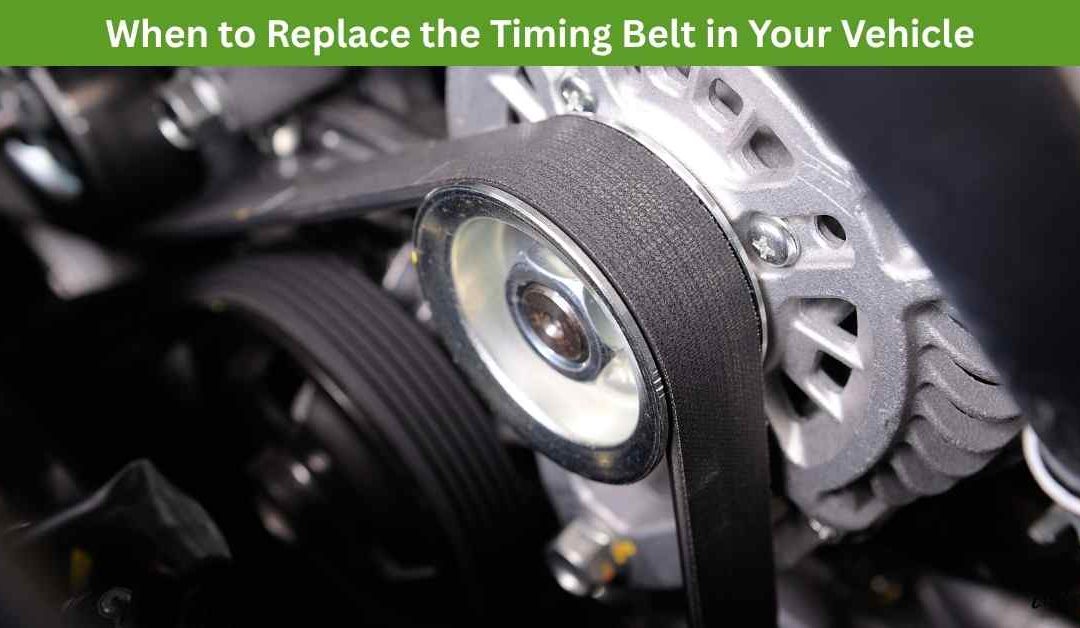
The timing belt is one of the most important components in your vehicle’s engine, yet it’s often overlooked until something goes wrong. Unlike tyres, brakes, or batteries, a timing belt usually doesn’t give much warning before it fails. Unfortunately, when it does break, the result can be catastrophic and lead to thousands of dollars in engine repairs.
That’s why understanding when to replace your timing belt is essential for protecting your vehicle and avoiding unexpected breakdowns. Whether you drive your car daily or only occasionally, staying on top of timing belt maintenance can save you significant time, money, and stress.
What does a timing belt do?
The timing belt is a reinforced rubber belt that synchronises the rotation of the engine’s crankshaft and camshaft.
In simple terms, it ensures that:
- The engine valves open and close at the correct time
- The pistons move in sync with the valves
- The engine operates efficiently and smoothly
Without proper timing, the engine cannot function correctly. If the timing belt fails, the engine’s internal components can collide, causing severe damage.
Do all vehicles have a timing belt?
No. Some vehicles use a timing chain instead of a timing belt.
Generally:
- Timing belts are made from reinforced rubber materials
- Timing chains are made from metal and typically last longer
If you’re unsure which system your vehicle uses, check your owner’s manual or speak with a qualified mechanic.
When should a timing belt be replaced?
The replacement interval varies depending on the manufacturer and vehicle model.
In many vehicles, timing belts should be replaced between:
- 60,000 and 100,000 kilometres
- Every 5 to 10 years
Some newer vehicles may have longer intervals, while others require earlier replacement.
The most important rule is to follow the manufacturer’s recommendations rather than relying on guesswork.
Why timing belt replacement is based on both age and distance
Many drivers focus only on kilometres travelled, but age is equally important.
Even if a car hasn’t been driven much, the timing belt can deteriorate due to:
- Heat exposure
- Rubber ageing
- Moisture
- Temperature fluctuations
A vehicle that has covered only 50,000 kilometres over ten years may still need a timing belt replacement because the rubber has aged.
What happens if a timing belt breaks?
A broken timing belt can cause one of the most expensive engine failures a vehicle owner may face.
In many modern engines, known as interference engines, a failed timing belt can result in:
- Bent valves
- Damaged pistons
- Cylinder head damage
- Complete engine failure
Repair costs can range from hundreds to several thousands of dollars depending on the extent of the damage.
Replacing the timing belt on schedule is almost always far cheaper than dealing with a failure.
Are there warning signs before a timing belt fails?
Unfortunately, timing belts often fail without much warning. However, some potential signs include:
- Ticking noises from the engine
- Engine misfires
- Rough idling
- Difficulty starting the vehicle
- Reduced engine performance
These symptoms don’t always indicate a timing belt problem, but they should be inspected promptly by a mechanic.
Why visual inspections aren’t enough
Some vehicle owners assume they can simply inspect the belt and determine whether it needs replacement.
The problem is that timing belts can weaken internally long before obvious damage appears.
A belt may look fine from the outside while:
- Internal fibres are deteriorating
- Teeth are weakening
- Structural integrity is compromised
This is why following service intervals is far more reliable than relying solely on visual inspections.
What other parts should be replaced at the same time?
Timing belt replacement often involves replacing several related components.
Common items include:
- Tensioners
- Idler pulleys
- Water pump
- Seals and gaskets
Since these parts are accessible during the timing belt service, replacing them together can reduce future labour costs and improve reliability.
How driving conditions affect timing belt life
Certain driving conditions can place additional stress on engine components, including the timing belt.
Examples include:
- Frequent stop-start driving
- Extreme heat
- Heavy towing
- Long periods of vehicle inactivity
While these factors don’t always change the official replacement interval, they can contribute to wear and should be considered during maintenance planning.
What if you bought a used car?
Timing belt replacement is one of the first things you should investigate when purchasing a used vehicle.
Ask for:
- Service records
- Maintenance receipts
- Timing belt replacement documentation
If there’s no evidence that the belt has been replaced and the vehicle is approaching the recommended interval, it’s often wise to replace it as a precaution.
The cost of preventive replacement is usually much lower than the risk of engine damage.
Can you delay timing belt replacement?
Many vehicle owners are tempted to postpone timing belt replacement because the car seems to be running perfectly.
This can be risky because timing belts rarely fail gradually. In many cases, they work normally until the moment they break.
Delaying replacement may save money in the short term, but it significantly increases the risk of:
- Sudden breakdowns
- Expensive engine repairs
- Being stranded unexpectedly
Preventive maintenance is always the safer option.
How timing belt maintenance affects resale value
A vehicle with documented timing belt replacement can be more attractive to potential buyers.
Buyers often view recent timing belt maintenance as a sign that:
- The vehicle has been properly maintained
- Major maintenance costs won’t be immediately required
- The risk of future engine problems is lower
Keeping records of timing belt replacement can therefore help protect your vehicle’s resale value.
The timing belt may not be a component you think about often, but it plays a critical role in your engine’s operation. Replacing it at the recommended interval is one of the most important preventive maintenance tasks you can perform. By following your manufacturer’s service schedule, keeping maintenance records, and avoiding unnecessary delays, you can protect your engine, avoid costly repairs, and keep your vehicle running reliably for years to come.
If you are in Rosanna, and looking to sell your car or get cash for trucks, below is the best way to visit us.
Eastern Cash For Cars
720 High St Rd, Glen Waverley, VIC 3150
(03) 7035 7830
www.easterncashforcars.com.au
Recent Comments